
In Brief
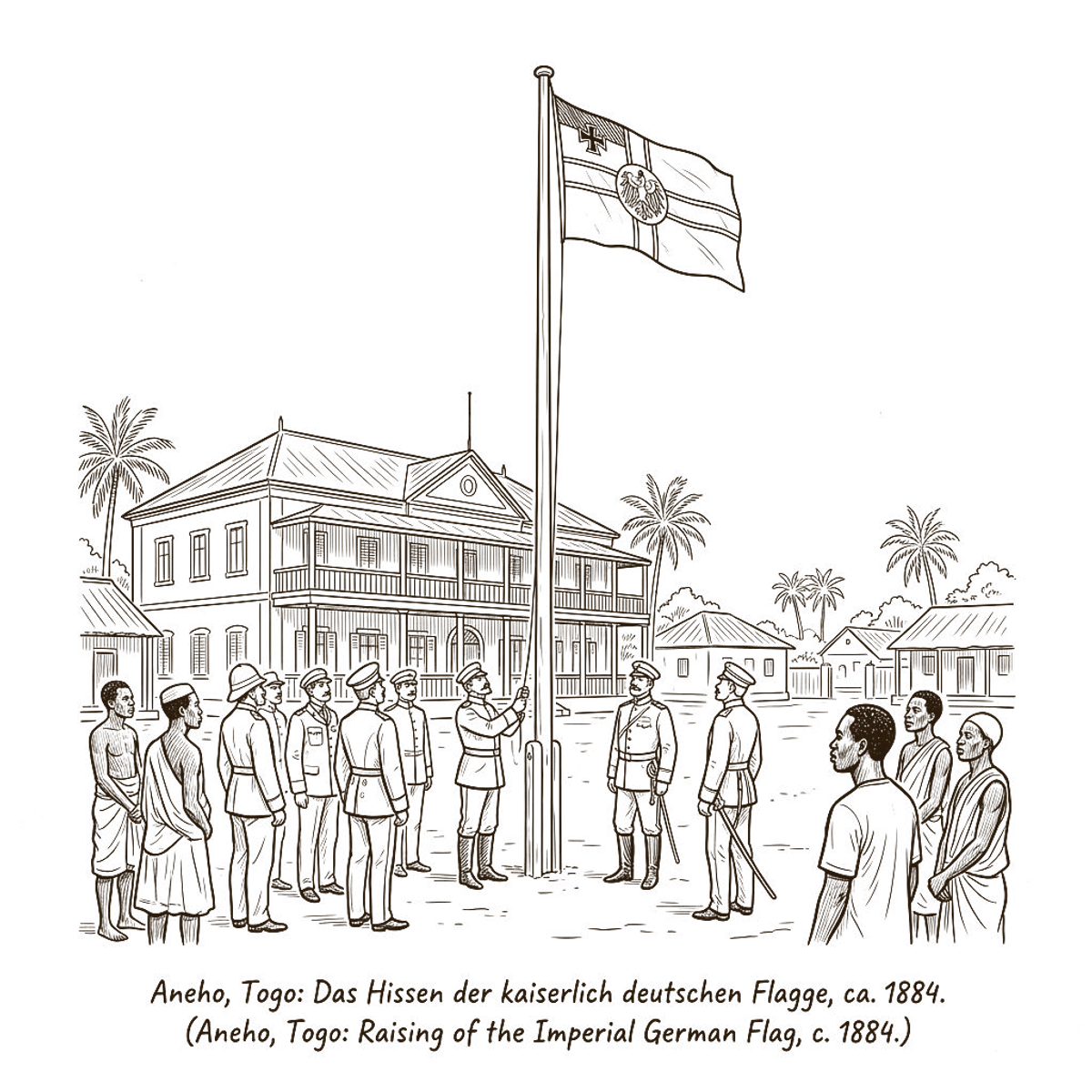
Key takeaways: Aného, formerly Petit Popo, was the first capital of German Togoland (1884-1914). Founded in the 17th century by the Guin people, the city bears the marks of three successive protectorates, unique Afro-Brazilian architecture, and a living lagoon heritage. Its history is that of a crossroads between Atlantic trade, colonial diplomacy, and Guin-Mina cultural resistance.
Table of Contents
- The Legacy of a Capital
- The Stones Tell a Story
- The River and the Ocean
- Afro-Brazilian Architecture
- The Weight of History
- Sources & References
The Legacy of a Capital
Aného is not a city like any other. Founded in the 17th century by the Guin, migrants from the Grand-Popo region (present-day Benin), it became, under successive protectorates, a nerve center of West African trade. Known first as Petit Popo to distinguish it from Grand-Popo, the city successively bore the names Ancho, Keta, and then Aného—each name bearing the mark of an era.
Under German administration (1884-1914), Aného was the first capital of Togoland. Colonists set up trading posts, religious missions, and administrative infrastructure there. It was a period of radical transformation: mud huts now stood alongside solid buildings with corrugated iron roofs, and sandy paths gave way to neatly laid-out streets.
The Stones Tell a Story
Walking through the Adido neighborhood, one encounters structures that seem to belong to another era. The Protestant church, inaugurated in 1895, with its red bricks and proud bell tower, testifies to the architectural precision of the German builders. Not far away, the remains of the first colonial courthouse serve as a reminder of the Kaiser administration's judicial footprint.
"Here, the past doesn't sleep; it breathes under every vaulted arch." — Testimony of a local guide, gathered in 2025
German archives preserved in Bremen and Berlin contain administrative documents revealing the complexity of colonial governance in Petit Popo. Correspondence between Governor Jesko von Puttkamer and the Guin chiefs shows subtle diplomatic negotiations, far from the simplistic narrative of a unilateral conquest.
The River and the Ocean
The Mono estuary, where fresh water meets the salt of the Atlantic, is the beating heart of Aného. It was here that pirogues laden with salt, dried fish, and textiles shaped the city's economy for over three centuries.
The fishermen of Glidji continue ancestral navigation techniques to this day. Their dugout canoes, carved from iroko trunks, glide over the lagoon with a grace that centuries have not altered. At dawn, when the mist lifts over the water, one understands why early European explorers compared this coast to a "forgotten paradise."
Afro-Brazilian Architecture
A lesser-known chapter in Aného's history is that of the Afro-Brazilian community. In the 19th century, descendants of freed slaves from Bahia and Salvador returned to the coast, bringing with them construction techniques and architectural styles that profoundly marked the urban landscape. Houses with verandas, wrought-iron balconies, and ornate pediments stand as testaments to this unique Brazilian influence in West Africa.
These builders, nicknamed the "Agoudas," constructed homes that continue to defy time. Their pastel facades, colonnades, and interior courtyards tell a story of resilience and cultural mixing. Today, only a few of these houses remain standing, weakened by coastal erosion and a lack of resources for restoration.
The Weight of History
Aného was the stage for events that shaped the destiny of modern Togo. It was here that the declaration of independence for the Togolese people was signed, and it was here that the country's first modern schools opened their doors. The city's former high school trained several generations of political leaders, intellectuals, and artists who contributed to the building of the nation.
Exploring Aného means accepting to drift between these two worlds—that of a past glory and that of a present seeking recognition. Every street, every ruined building, and every elder's tale is an invitation to understand the profound depth of a city that refuses to disappear.
Further Reading
- The Origins of Aného: Foundation of the Guin Kingdom — the complete story of the migration from Accra and settlement on the lagoon
- Aného, First Capital of Togo (1886-1897) — the era when Petit Popo governed Togoland
- The German Protectorate in Aného (1884-1914) — thirty years of German colonial presence
Sources & References
- German Federal Archives (Bundesarchiv), Berlin — Administrative correspondence of Togoland, 1884-1914
- Bremen Mission Archives — Missionary reports and parish registers, 1847-1914
- Pio, A. — Histoire des villes côtières du Togo, Éditions Awoudy, 2018
- Lawson, Z. — Le Grand Livre des Lawson, family archives, Aného
- Field Interviews — Local guides in Aného, Glidji, and Lolan, March 2025