
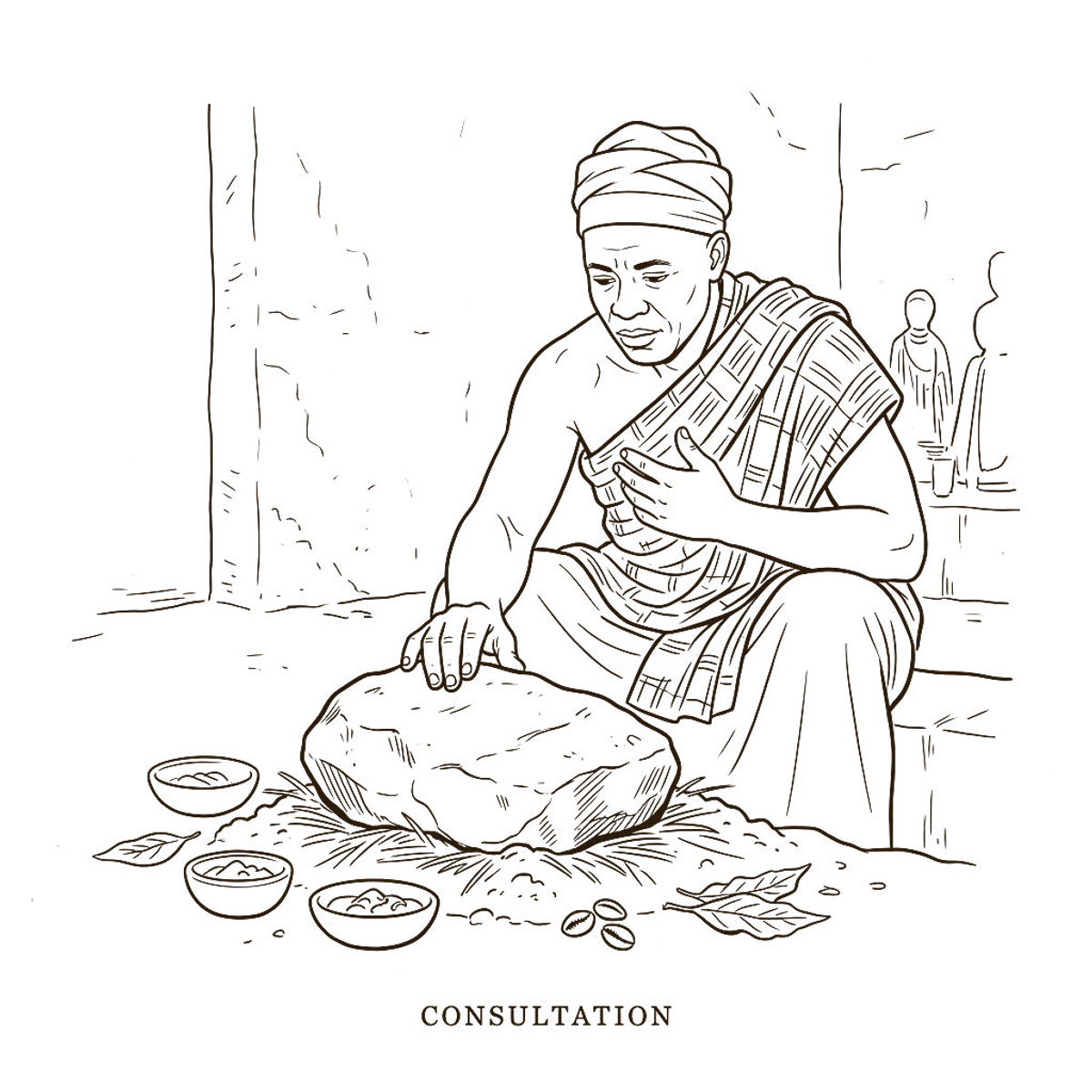
In Guin-Mina society, the separation between temporal and spiritual power is sharp. While kings (Lawson and Adjigo) govern the city, it is the Hunon (or Hounnon) who dictate the calendar of life, question the future, and calm the storms. Without the Voodoo priest, the royal crown has no divine foundation.
Who is the Hunon?
The term "Hunon" designates the high priest, the supreme head of a Voodoo convent or a specific divine cult. Unlike a simple worshipper or a basic initiate ("Voudoussi"), the Hunon has dedicated their entire existence to the service of one or more deities.
His burden is overwhelming. He is not just a liturgical celebrant; he is simultaneously:
- Diviner (Bokonon): Able to consult the Fa oracle to diagnose the community's ills.
- Pharmacopeia and Healer: He masters the secrets of medicinal plants (the "Leaves") to heal body and mind.
- Moral Judge: He is the guardian of taboos ("Tɔkɔ") and sanctions those who break the spiritual laws of the city.
The Daily Priesthood
The Hunon's daily life is punctuated by invisible obligations. Even before sunrise, he must feed the altars, pour libations of water, gin, or red palm oil, and pronounce incantations to ensure that the rising day will not harm his community.
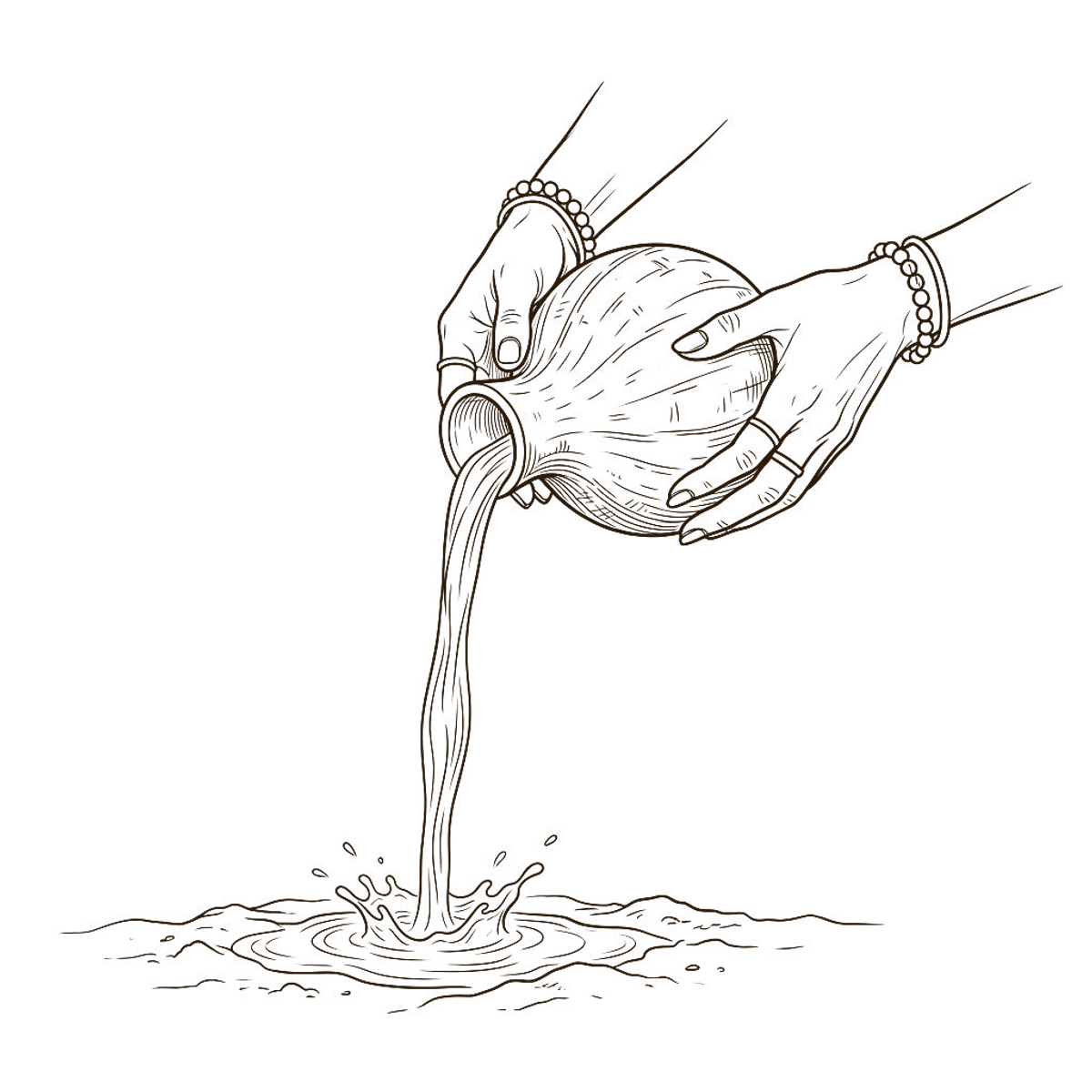
The morning libation ritual: feeding the earth and appeasing the ancestors (transparent illustration).
Vocation and Initiation
One does not choose to become a Hunon; one is "chosen" by the deities. This choice often manifests in spectacular ways: a series of recurring dreams, an illness that no modern doctor can cure, or possession during a dance ceremony.
Retreat in the Convent
Once the call is confirmed through oracle consultation, the future priest leaves his family and possessions to enter the convent ("Hounzo"). Initiation lasts many months. During this period, the novice undergoes a true symbolic death:
- He learns the sacred language (Houn-gbe), an esoteric tongue incomprehensible to non-initiates.
- He receives ritual scarifications marking his belonging to Voodoo.
- He memorizes long litanies, complex drum rhythms, and botanical recipes.
Upon leaving, he is reborn with a new name, carried in triumph during a public ceremony where he demonstrates his mastery of trance and spirits.
The Case of High Priestesses (Hunon-Mina)
It is fundamental to note that Voodoo is profoundly egalitarian before the deity. Women access the highest spheres of the priesthood. In Aneho, many high priestesses lead convents, particularly those dedicated to water deities (Mami Wata) or earth deities. Their voices carry as much weight, if not more, than those of their male counterparts during major city decisions.
The Hunon and Political Power
The history of Aneho is dotted with powerful kings who had to bend the knee before a Hunon. The priests of the sacred forest of Glidji (the Ge-Fiogan and the Niigblin-non) hold ultimate power: that of reading the message of the Sacred Stone during the Epe-Ekpe festival.
If the stone predicts a year of disaster, not even the King can contradict the oracle. It is up to the Hunon to organize massive expiatory sacrifices to purify the city. They are, in fact, the guardians of the unwritten constitution of Guin society, ensuring that political power never becomes tyrannical.
The Priesthood Facing the Modern World
Being a Hunon in the 21st century is a major challenge. Faced with the progression of Abrahamic religions (Christianity, Islam) and the secularization of society through modern schooling, the Voodoo priests of Aneho are fighting for the survival of their intangible heritage.
Adaptation and Modernization
Today, many Hunons are stepping out of the shadows of their convents. They form national federations, participate in university symposia on traditional medicine, and open their doors to researchers and cultural tourists to demystify Voodoo, which is often a victim of imported negative clichés.
Draped in white, adorned with bead necklaces (Dje), and firmly gripping their royal fly-whisks, the Hunon remain the most majestic and mysterious silhouettes walking the sandy streets of Aneho, silently watching over the soul of the lagoon.