
The German colonial archives constitute an irreplaceable source for the history of Aného. Although scattered across several institutions in Germany, Italy, and Togo, they offer unique insight into the protectorate period (1884-1914). Here is a detailed inventory of the main collections available for researchers and genealogists.
The Bundesarchiv in Berlin
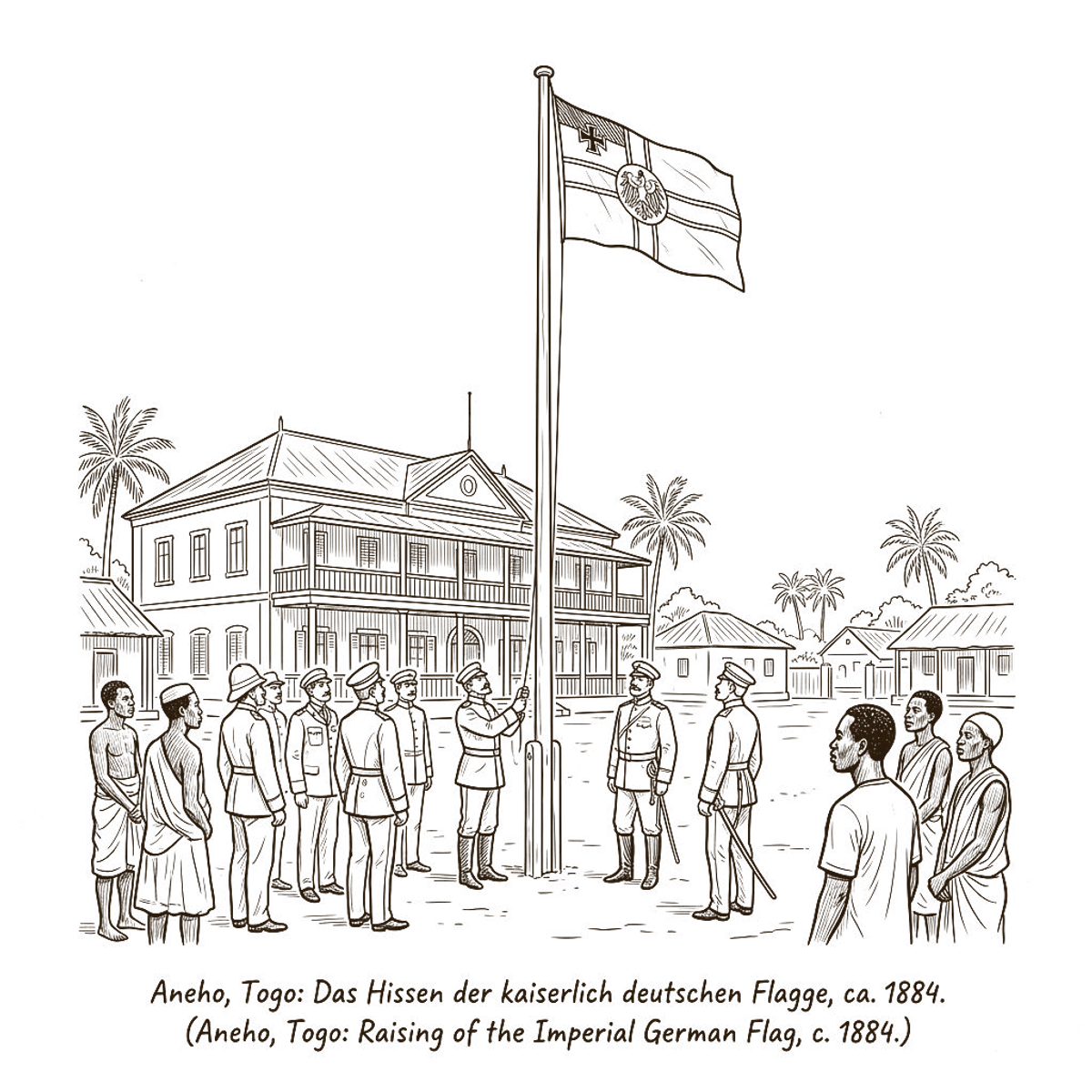
The German federal archives hold the bulk of the administrative documentation from Togoland. The Reichskolonialamt (Imperial Colonial Office) collection contains correspondence between the local governor and Berlin, annual reports, censuses, and tax records. The documents are in German, and sometimes in French or English.
This collection is particularly rich for Aného due to its status as the capital of Togoland between 1886 and 1897. It includes files on the construction of the wharf, negotiations with the Lawson kings, population censuses, and diplomatic exchanges with the British authorities in the neighboring Gold Coast. Researchers can consult the inventory online on the Bundesarchiv website, but the documents themselves are not digitized.
The SVD Mission Archives in Rome
The Society of the Divine Word (SVD) has preserved the reports of its missionaries in Aného, notably those of Father Jakob Muller. These documents, written in German, cover the period from 1892 to 1914. They offer a unique look at daily life, relations between missionaries and local populations, and tensions with the colonial administration.
The SVD archives are of particular interest to genealogists. The baptism, marriage, and death registers kept by the mission often constitute the only written record of the existence of Aného's inhabitants during that time. Names, dates, and filiations provide invaluable information for anyone seeking to reconstruct family history.
The National Archives of Togo in Lomé
The German collection at the National Archives of Togo holds duplicates of certain colonial documents, as well as locally produced records. It includes notarized deeds, judgments rendered by customary and colonial courts, and correspondence with traditional chiefs. These archives, though less voluminous than those in Berlin, are more easily accessible to local researchers.
How to Consult These Archives
Most of these collections are not digitized. Consultation takes place on-site, by appointment. Knowledge of German is essential for the Berlin and Rome collections. For the National Archives in Lomé, French is sufficient. Local researchers trained in German paleography can assist genealogists in their research. It is recommended to contact the institutions several weeks in advance and prepare a precise list of desired documents. Some collections are subject to access restrictions for conservation reasons.